Client: Linde Engineering
Linde Engineering develops process technologies for the processing, separation, and liquefaction of gases for customers around the globe. The company offers integrated complete solutions from plant design to assembly and operation and maintenance, as well as individual solutions to increase productivity, efficiency, and the lifespan of plants. Linde Engineering possesses the entire know-how of the T-EPC value chain (Technology, Engineering, Procurement, Construction) and has already applied this in the planning and construction of more than 4,000 plants.
Initial Situation and Challenge
As part of the merger between Linde and Praxair, it was necessary to set up a comprehensive program management for the Finance & Controlling department of Linde Engineering. The challenge for the client, Mr. Serkan Şen, Head of Finance & Controlling at Linde Engineering, was to combine the numerous special topics into a coordinated program. The resulting additional workload for his key employees had to be taken into account, and above all, the cultural dimension of the merger had to be kept in mind: the employees of the new Finance & Controlling department come from two companies that were both globally active and very successful in the past, but with very different business models and corporate cultures. Accordingly, it was important that the program be accompanied by intensive communication measures and that collaboration be designed across departments using modern working methods.
“Within the originally planned budget and timeframe, the digatus team was able to establish a program management and hand it over to the future person in charge, so that they can immediately apply their knowledge of the organization, their network, and their professional competence to a high degree after their start.”
Serkan Şen – Head of Finance & Controlling, Linde Engineering
Solution
To ensure an ideal project progression and the sustainable establishment of the program, the focus was initially placed on the precise planning of the necessary structures. To this end, a uniform meeting structure for the program was developed and established as a first step. Previously, meetings primarily took place on a subject-specific basis within individual departments or divisions. In the future, they should instead be more topic-related and interdisciplinary between the corresponding knowledge carriers.
In addition, joint program meetings were introduced for better coordination with department heads. This facilitates decision-making and eases coordination between individual workstreams. To create additional transparency and further improve communication, topic-specific exchange rounds were also created across hierarchical levels as a platform for new ideas and innovations.
The second step was the introduction of a structured and efficient reporting culture on the progress of individual projects tackled within the framework of the merger. For an overall view of the individual measures and steps, as well as their dependencies, action item tracking was introduced and made accessible to all project participants. This made it possible to transparently present project progress and involve all project members. Above all, the cross-project listing of necessary actions and their interdependencies led to improved collaboration across departmental boundaries.
Additionally, it was possible to elevate the exchange within project teams and at the program level to a new level. Especially collaborative work on documents in real-time could significantly increase efficiency.
Last but not least, the program ensured that the overarching program office of the group could be systematically informed about the status of individual projects in a coherent manner. From synergy realization to the rollout of future group-wide tools and processes, all post-merger activities are thus included in the reporting.
Customer Benefits
Through the introduction of new meeting structures in combination with the implemented and particularly efficient reporting culture, good transparency was created within the merged company regarding project and program progress. All decision-makers are now continuously involved and well-informed at all times.
It was also important for the client that the program management could start as quickly as possible after the completion of the merger. It was then to be handed over to a suitable internal employee after a short and intense start-up period. As these requirements were met, the future internal responsible person was able to start work immediately.
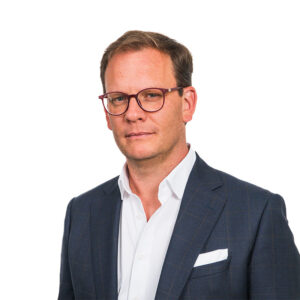
Stephan Bals
He studied Business Administration with a focus on Management at the Beuth University of Applied Sciences Berlin. After completing his studies as a graduate in Business Administration, he began his career at Siemens AG in Munich.
Early in his career, he gained experience in various executive positions. Among other roles, he was responsible as managing director for medium-sized IT consulting and service companies, most recently Xiopia GmbH, as well as serving on the board of Allgeier IT Solutions AG. With the founding of digatus it group, he continued his career as a founder and entrepreneur. In early 2015, together with Felix Kirschner, he founded digatus it group AG with the goal of "building" a market-relevant IT service provider in Germany. His main focus within the digatus Group is in the areas of sales, growth management, and M&A. At the interfaces between business and IT, he is a sought-after mediator, sparring partner, and idea generator.
In addition to his role as CEO of digatus it group AG, he is involved entrepreneurially as a co-founder and investor, volunteers in various non-profit initiatives and associations, and serves as an advisory board member, senior advisor, and supervisory board member.